Website under maintenance
Our website is currently undergoing imported maintenance.
Please contact us on the details below:
065 094 2152
info@lefikalaphodiso.co.za

From February to November 2026, 10 trainees funded by the GBVF Response Fund completed Lefika La Phodiso's eight-module Community Art Counselling training, learning to support people affected by trauma and gender-based violence through art.
Over ten months, the trainees met online every week, made art, practised counselling with one another, and learned what it takes to hold a safe, creative space for people who have experienced violence. All 10 are now finalising their submissions.
The trainees were nominated by partner organisations working to end gender-based violence, and each brings experience in community development. The course leads to an NQF Level 5, HWSETA-accredited qualification, and prepares them to run community art counselling support groups in their own communities from 2027.
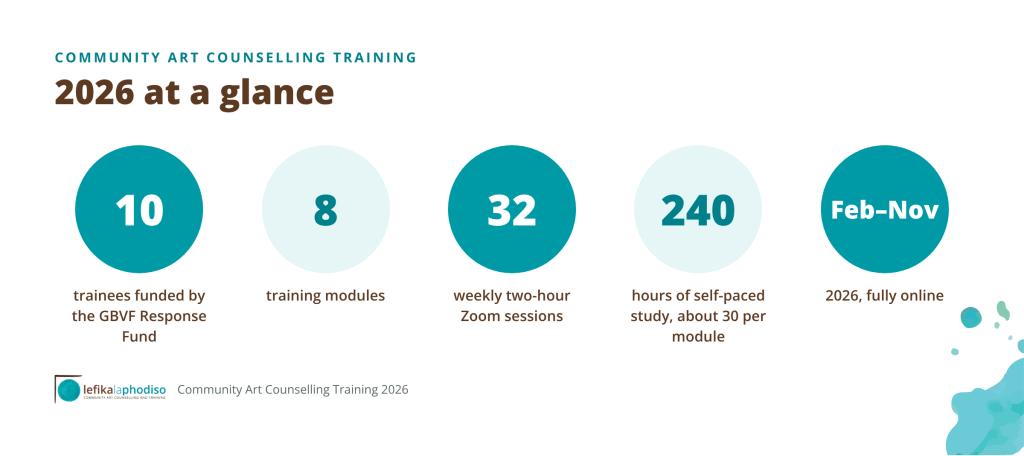
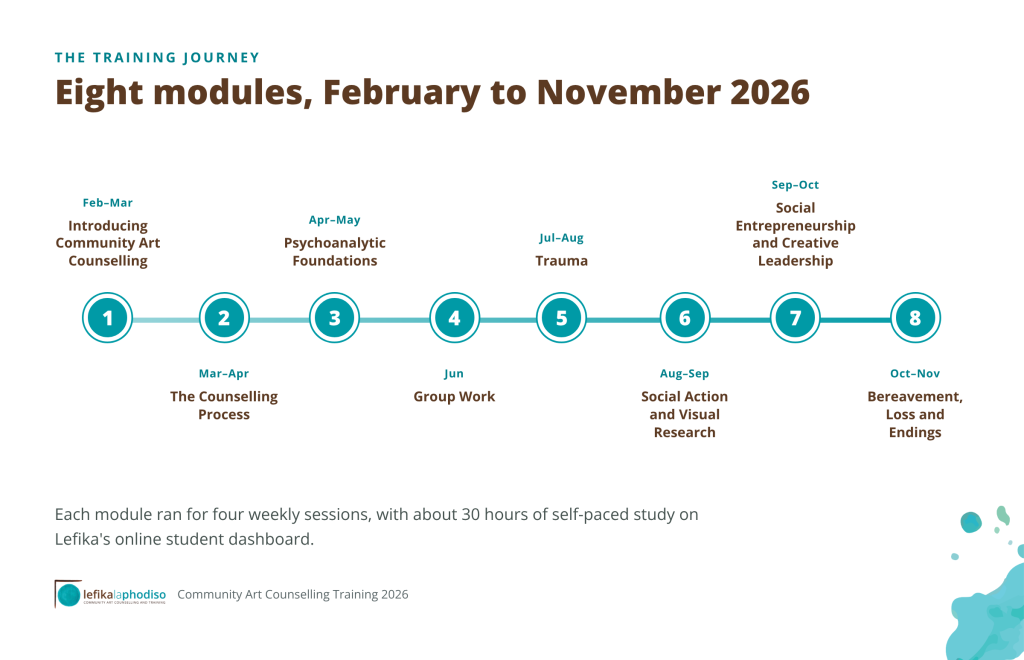
The training ran fully online, so trainees could join from their own homes and communities. After an orientation on 10 February, the group met for four two-hour Zoom sessions per module every Tuesday evening, from 17 February to 17 November. Between sessions, each module offered about 30 hours of self-paced study on Lefika's online student dashboard: videos, readings, quizzes, journal activities and written assignments.
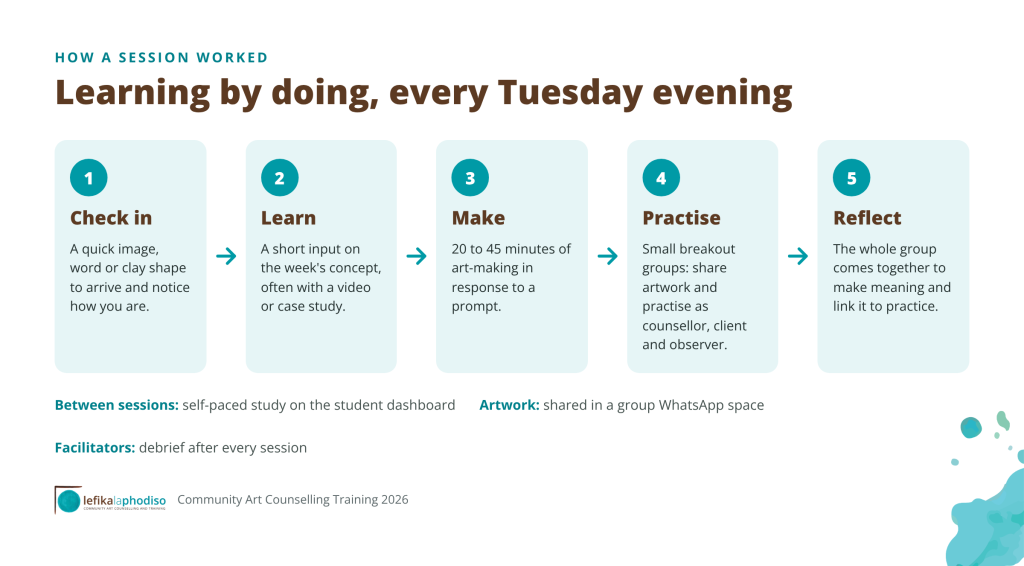
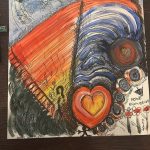
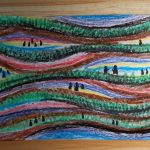
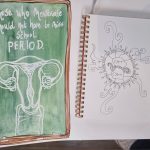
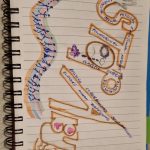
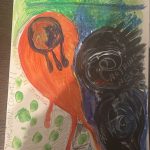
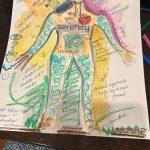
Every session was experiential. Trainees made art, worked in small breakout groups where they practised as counsellor, client and observer, and came back together to reflect. Sessions were led by Rozanne Myburgh, HPCSA-registered arts therapist, and Kamal Naran, with intern therapists co-facilitating. The team debriefed after every session to plan support for individual trainees.
The modules move from self-awareness and basic skills to trauma, group work, research and leadership.
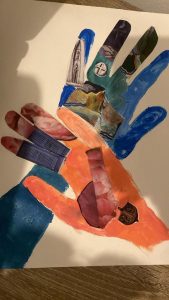
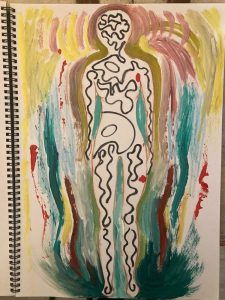
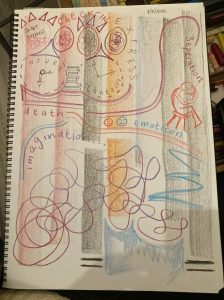
Across the year, trainees built the skills a community art counsellor needs to support people affected by gender-based violence safely. Above all, they learned that safety comes first, and that an image can carry what is too hard to say. For many survivors, that is where disclosure begins.
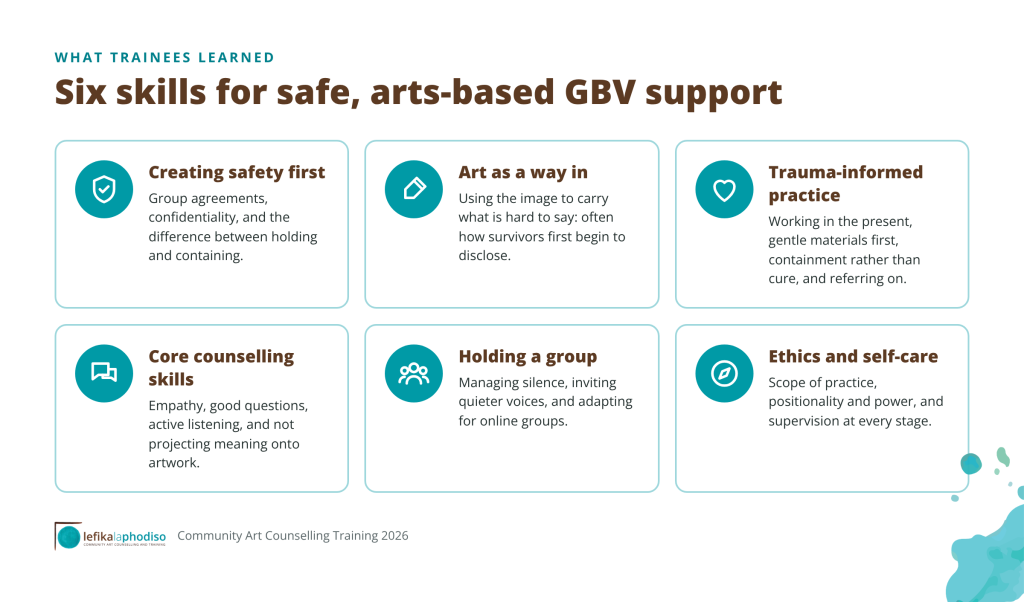
Trainees left written reflections after each session. Their words appear here unedited, without names.
“The session was informative, I was able to differentiate between empathy, sympathy and identification.”Trainee, Module 2
“My take out was that I could create my own safe space and I am also responsible for doing so.”Trainee, Module 5
“Although I am still fearful to speak out I feel like I am becoming more comfortable with overcoming this. Work in progress.”Trainee, Module 2
“I loved every minute of the session, even the long silences. I found they created internal ease and spaciousness for me to be able to process and learn.”Trainee, Module 4
“Creative Entrepreneurship is real and does exist to uplift young people.”Trainee, Module 7
“I have learnt so much about myself and holding that space for me. I am grateful for everyone that held the space for me in this journey.”Trainee, final session
We analysed 30 session summaries and 156 written reflections from the cohort. Six themes ran through the year.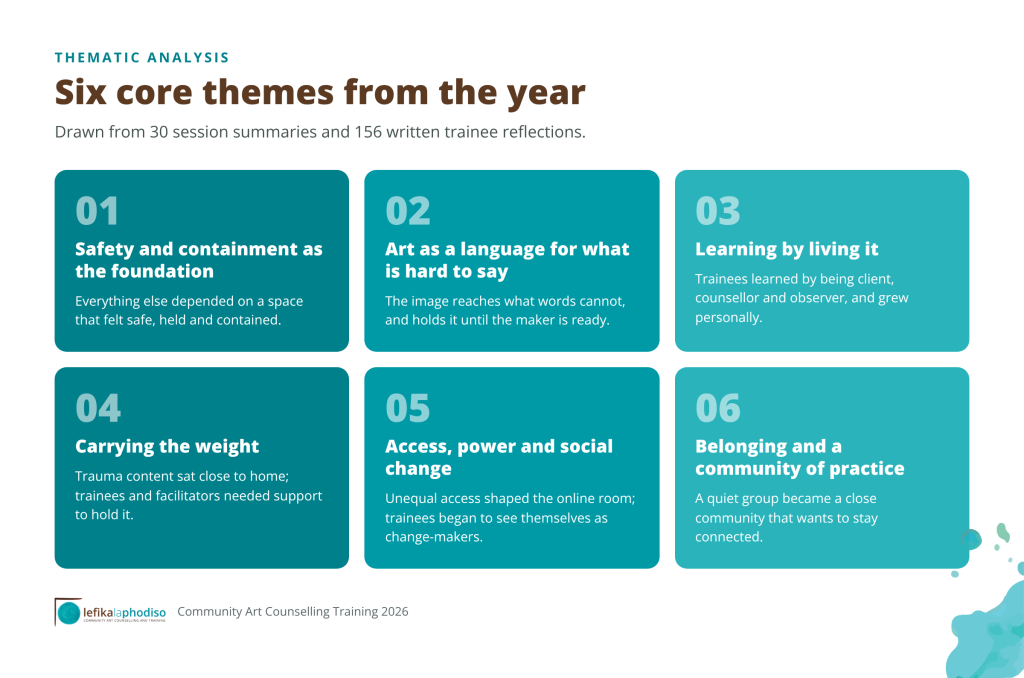
Online learning brought real challenges: dropped connections, data costs and uneven access to cameras. We posted instructions in chat and on WhatsApp, let trainees share artwork after sessions, and relied on the self-paced dashboard so no one fell behind. The emotional weight of the trauma and loss modules meant facilitators debriefed after every session and connected trainees with support where needed.
Once their submissions are finalised, the 10 trainees will begin running community art counselling support groups in their own communities, in 10-week cycles with weekly supervision from Lefika.
With thanks to the GBVF Response Fund for making this training possible, and to our 10 trainees for their courage, curiosity and care. Interested in training as a community art counsellor? Get in touch at info@lefikalaphodiso.co.za.
Read everything about our Community Art Counselling training here: www.training.lefikalaphodiso.co.za